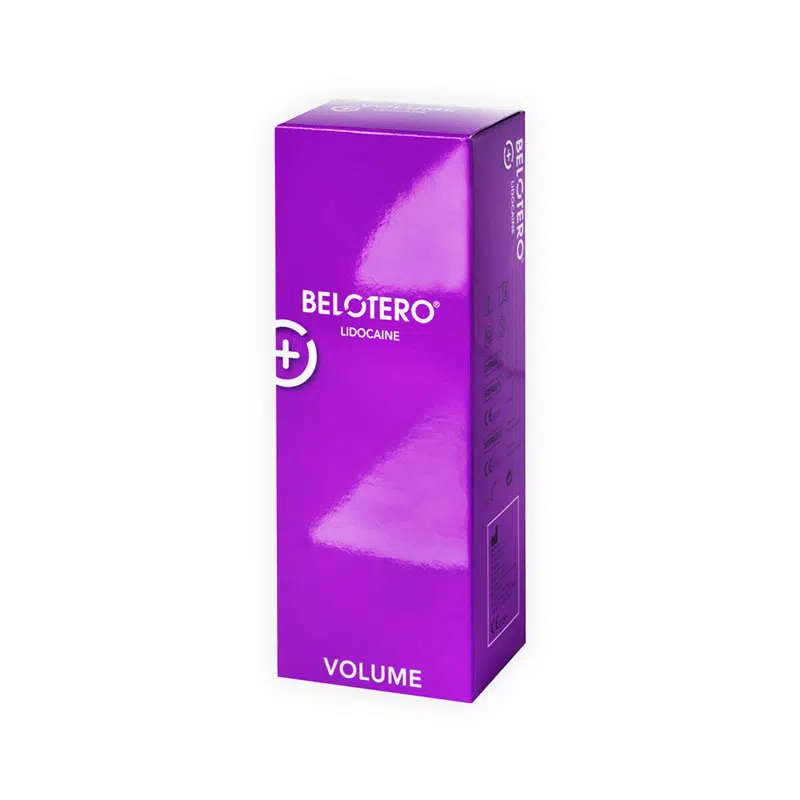
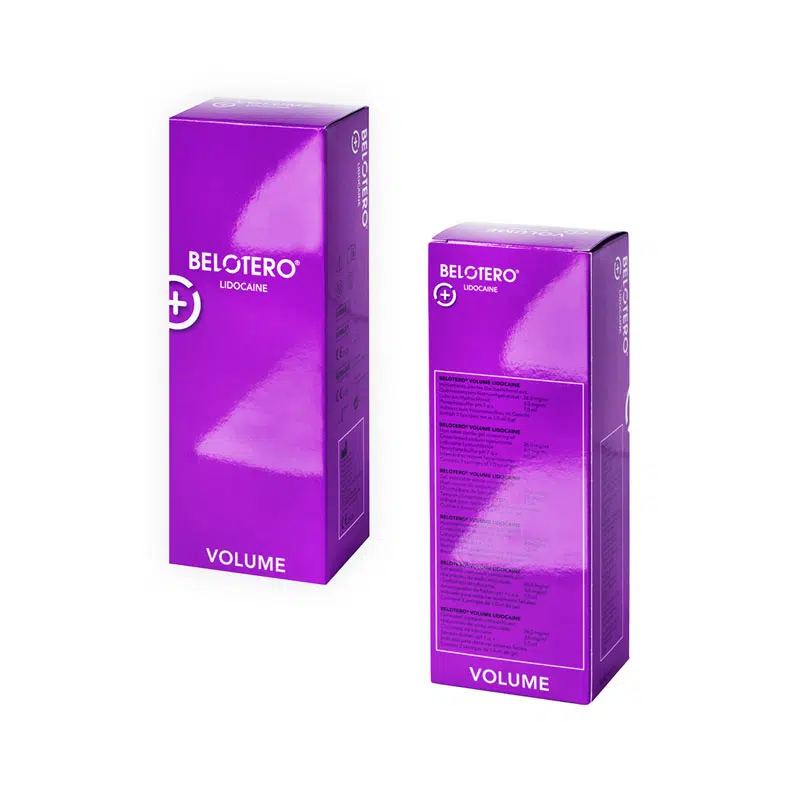
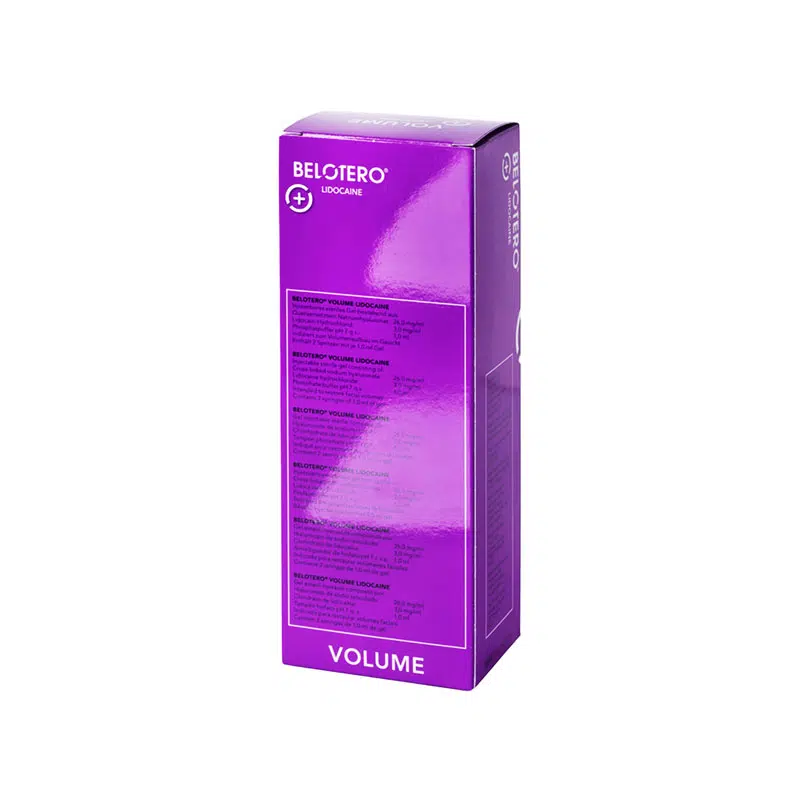
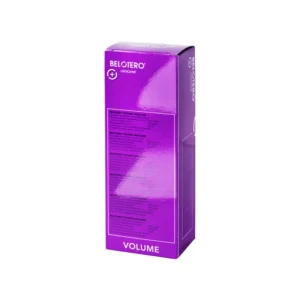
BELOTERO® VOLUME with Lidocaine
$349.00
Manufacturer: Merz Pharma
Active Substance(s): HYALURONIC ACID, A PHOSPHATE BUFFER, LIDOCAINE
Strength: 26mg/ml HA, 3mg/ml Lidocaine
Pack Size: 2 x 1ml Pre-Filled Syringes, 2 x 27G1/2” Cannulas, 2 x 30G 1/2” and 2 x 30G 1/2″ Needles
Accessories: Package insert, 2-30G 1/2″ needles, 2-27G 1/2″ needles, 2-27G 37mm cannulas, 2-25G 12.7mm needles, 4 traceability labels
What is BELOTERO® VOLUME with Lidocaine?
BELOTERO® VOLUME with Lidocaine is a hyaluronic acid-based dermal filler manufactured by Anteis SA, which is a multinational pharmaceutical corporation headquartered in Switzerland. In aesthetic medicine, BELOTERO® VOLUME with Lidocaine is often used to restore facial volume (e.g., to enhance the chin or the cheeks).
What are the features of BELOTERO® VOLUME with Lidocaine?
- Superior volumizing effects: The monophasic BELOTERO® VOLUME with Lidocaine gel has significantly higher volumizing ability than biphasic dermal fillers.
- Easy-to-inject: BELOTERO® VOLUME with Lidocaine can be easily injected through needles with a small diameter, thanks to the patented reticulation process during preparation.
What accessories/items are included with BELOTERO® VOLUME with Lidocaine?
- 1 package insert
- 2 sterile prefilled glass syringe
- 2 27G1/2” cannulas
- 2 30G 1/2″ needles
- 2 27G 1/2″ needles
- 2 25G 12.7mm needles
- 4 traceability labels
What are the ingredients of BELOTERO® VOLUME with Lidocaine?
- 26 mg/mL Hyaluronic Acid/Lidocaine
- 3 mg of lidocaine (BELOTERO® VOLUME with Lidocaine only)
- Phosphate buffer (pH 7)
How long do the results last?
BELOTERO® VOLUME with Lidocaine can last up to 18 months when used for adding volume to temple or cheeks.
What is the expected recovery time for my patients?
BELOTERO® VOLUME with Lidocaine generally does not need recovery time.
What are some important safety tips to follow when using this product?
- Do not inject BELOTERO® VOLUME with Lidocaine into the lips, tear-trough region, glabellar region and blood vessels. This product should only be administered into a non-inflamed, healthy skin that has been thoroughly disinfected.
- Do not use BELOTERO® VOLUME with Lidocaine during breastfeeding or pregnancy.
- Do not use BELOTERO® VOLUME with Lidocaine in those who are allergic to sodium hyaluronate, and individuals less than eighteen years of age. BELOTERO® VOLUME with Lidocaine is contraindicated in these patients.
- Stop the injection (and change the needle/cannula) if the injection pressure is excessively high, or if the needles become obstructed.
What are the most common side effects?
- Redness
- Erythema
- Edema
- Itching
- Pain
- Swelling
Related products
Buy Dermal Fillers Online